At the beginning of the class, we started to address and put into practice some of the fundamental skills for us, the future teachers of a language different from our own, including grammar. As the teacher explained, grammar is a skill that we as teachers must have completely clear, and although it is not the central point for students, it is for those who want to teach it. Therefore, we addressed topics such as the future tense, frequency adverbs, and prepositions, as well as the place they occupy in a sentence.
In addition, the teacher showed different tools, applications, and websites that contain some games that allow us to practice our grammar and acquire new vocabulary, since many times we stop communicating because we are embarrassed or simply because we have very little vocabulary to sustain a conversation.
Throughout the class, we talked about the importance of games in learning a language, and I believe this is extremely true and effective. In my English classes with second-grade students, I try to make the classes very dynamic, and I have noticed that this turns learning into a more meaningful experience. They remember the topics more easily and participate, leaving aside their shyness and forgetting for a moment that they will be evaluated, opening up a space to learn and enjoy this process.
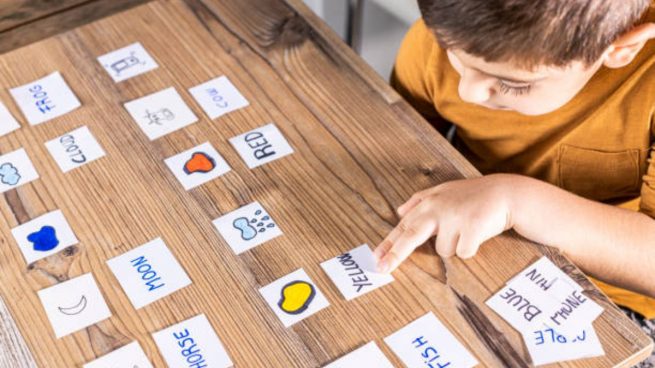
Undoubtedly, the use of dynamic strategies and games facilitates the meaningful learning of a language, creating a good environment for natural and effective language acquisition. These playful and participatory methodologies provide numerous benefits that favor the learning process.
First, dynamic strategies and games foster a relaxed and fun environment in the classroom. Learning a language can be a challenging task and sometimes cause anxiety in students. However, by incorporating playful elements and entertaining activities, stress is reduced, and students' motivation increases. When students have fun, they are more receptive and willing to actively participate in the learning process.
Moreover, dynamic activities and games facilitate the acquisition of vocabulary, grammatical structures, and idiomatic expressions. As Vygotsky (1978) emphasizes in his social development theory, the role of play in the zone of proximal development, where students face challenges that exceed their current level with the help of the teacher or their peers. Many of these activities are specifically designed to practice and reinforce these elements in playful and appealing contexts.
Finally, dynamic strategies and games create positive emotional associations with language learning. As Skehan (1998) explains in his language processing model, play facilitates the automatization of linguistic processes, such as grammar and vocabulary, through repetition and practice in meaningful contexts. This increases students' motivation and dedication, facilitating more effective and lasting learning.
VIDEO: https://voca.ro/1g89J9WWUKOw
Bibliography:
Skehan, P. (1998). A cognitive approach to language learning. Oxford University Press.
Vygotsky, L. S. (1978). Mind in society: The development of higher psychological processes. Harvard University Press.
Comentarios
Publicar un comentario